
Core Web Vitals for Business Websites: A Practical Guide
Core Web Vitals for Business Websites: A Practical Guide
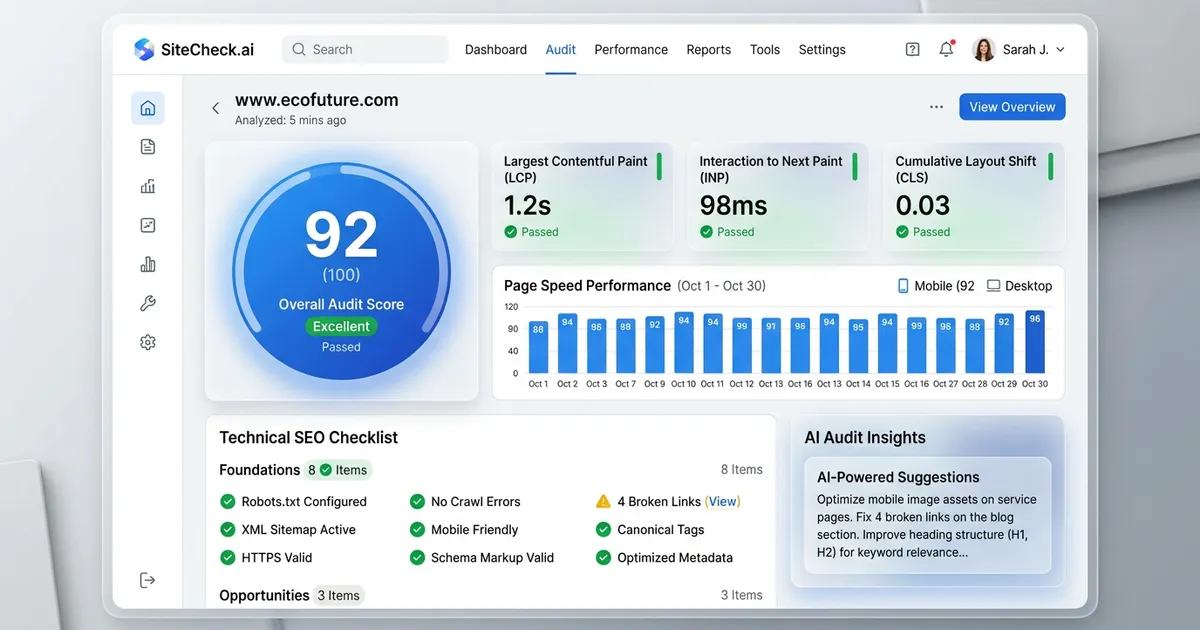
Core Web Vitals are experience signals that help teams discuss how quickly important content appears, how responsive a page feels and whether the layout stays stable. They are useful because they turn vague complaints such as 'the site feels slow' into specific areas that developers and content teams can investigate.
What the Three Core Web Vitals Measure
| Signal | What it describes | Common business impact |
|---|---|---|
| Largest Contentful Paint | When the main visible content appears | Visitors wait before understanding the page |
| Interaction to Next Paint | How quickly the page responds to interaction | Menus, forms or filters can feel unresponsive |
| Cumulative Layout Shift | How stable the layout remains | Visitors may tap the wrong control or lose their reading position |
Start With Real Page Types
Do not test only the homepage. Review the page types that matter to the business: key services, product categories, product details, lead landing pages and high-traffic articles. A fast homepage does not compensate for a slow checkout or an unstable enquiry page.
Common Causes of Slow Main Content
- Oversized hero images
- Slow server response
- Render-blocking styles or scripts
- Important content loaded only after client-side work
- Too many third-party tags
- Fonts that delay visible text
Why Interaction Can Feel Delayed
Long JavaScript tasks can prevent the browser from responding promptly. Heavy sliders, complex animation, large client-side bundles and third-party widgets often contribute. Remove unnecessary work first, then split or defer the code that remains.
Prevent Layout Movement
Reserve space for images, embeds and dynamic notices. Avoid inserting content above what a visitor is already reading, and load fonts in a way that reduces dramatic text reflow. Stability is both a technical and design concern.
Use Field and Lab Data Together
Lab tools help reproduce and diagnose issues in a controlled environment. Field data reflects actual devices, connections and user behaviour over time. Use lab testing to find causes, then field data to understand whether the deployed change improved real experiences.
A Sensible Improvement Order
- 1Measure important templates
- 2Identify the element or task behind the poor signal
- 3Fix oversized media and server delays
- 4Reduce unnecessary client-side code
- 5Reserve layout space
- 6Retest before and after deployment
- 7Monitor real-user data over time
Need a technical website review?
Explore Webamazee's technical SEO service for crawlability, performance and site health work.
Explore Technical SEOPlanning a performance-focused build?
See how our website development process combines responsive UX with a strong technical foundation.
Website DevelopmentWritten by
Tilak Raj
Web Developer at Webamazee. Tilak Raj helps businesses grow with a blend of data, AI and proven strategy.